Your path towards a degree at HFU
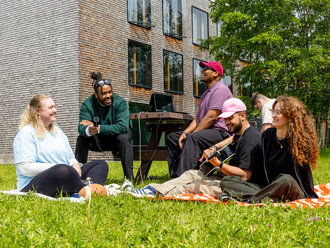
Great to see you're interested in taking a full degree at HFU! We can’t wait to welcome you into our vibrant international community.
You can look forward to excellent teaching, a supportive learning environment, and unforgettable experiences surrounded by the breathtaking countryside of the Black Forest.
This is where your journey towards a successful future begins – together with other students from around the world.
Application
Bachelor’s programmes
Foreign nationals with a German university entrance qualification are admitted in the same way as German nationals.
German nationals with foreign certificates cannot apply until the certificate has been recognised as a higher education entrance qualification by the:
Regierungspräsidium Stuttgart
Abteilung 7 Schule und Bildung
Postfach 10 36 42
70031 Stuttgart
Telephone +49 711 904-17170
www.rp-stuttgart.de
Foreign applicants with foreign certificates and stateless applicants must first submit a study application to the:
HTWG Konstanz
Studienkolleg
Alfred-Wachtel-Straße 8
78462 Konstanz
Germany
External link opens in a new window:www.studienkolleg.htwg-konstanz.de
The Center for International Students of the Universities of Applied Sciences in Baden-Württemberg (Studienkolleg) will decide whether an assessment test or a German language proficiency test (DSH) must be taken or whether a direct university entrance qualification can be issued.
https://www.htwg-konstanz.de/en/academics/center-for-international-students-konstanz/recognition-of-certificates/procedure
Please allow processing time for the certificate recognition.
Master’s programmes
For applications to master’s programmes, the procedure may vary. Please contact the respective programme coordinators directly.
External link opens in a new window:Go to the master’s programmes
The German proficiency you need to study in German
Foreign nationals must provide proof of very good German language skills for our German-language degree programmes. Foreign nationals with a German university entrance qualification are exempt from this requirement.
C1 language level
As a rule, a minimum language level of C1 according to the Common European Framework of Reference for Languages (CEFR) must be demonstrated for German-language bachelor's degree programmes. We accept the following proof of German language proficiency:
- DSH German language examination for university entrance, overall result minimum DSH-2
- Test of German as a foreign language: TestDaF (average minimum TDN 4)
- “German” section of the assessment test at a preparatory college
- The German Language Diploma of the Standing Conference of the Ministers of Education and Cultural Affairs - Second Level (DSD II)
- Central Upper Secondary School Examination of the Goethe Institute (ZOP)
- First level German Language Diploma of the Goethe Institute (Kleines Deutsches Sprachdiplom of the Goethe-Institut) (KDS)
- Advanced German Language Diploma of the Goethe Institute (Großes Deutsches Sprachdiplom of the Goethe-Institut) (GDS)
- Goethe-Zertifikat C2 - Großes Deutsches Sprachdiplom (GDS)
- telc German C1 University exam
B2 Language level
Different regulations apply to the following degree programmes:
- Internal link opens in the same window:Applied Biology
- Internal link opens in the same window:Applied Health Sciences
- Internal link opens in the same window:Applied Materials Science
- Internal link opens in the same window:Electrical Engineering
- Internal link opens in the same window:Games & Immersive Media
- Internal link opens in the same window:Midwifery Science
- Internal link opens in the same window:International Business
- Internal link opens in the same window:Mechanical Engineering and Mechatronics
- Internal link opens in the same window:Mechatronics and Digital Production
- Internal link opens in the same window:Medical Engineering – Clinical Technologies
- Internal link opens in the same window:Medical Engineering – Technologies and Development Processes
- Internal link opens in the same window:Molecular and Technical Medicine
We accept the following proof of German language proficiency for the above-mentioned degree programmes. These generally correspond to an advanced language level of B2 according to the Common European Framework of Reference for Languages (CEFR).
- DSH German language examination for university admission DSH, overall result minimum DSH-1
- Test of German as a Foreign Language: TestDaF (average minimum TDN 3)
- Telc German B2 University exam
- Goethe Certificate B2
- The German Language Diploma of the Standing Conference of the Ministers of Education and Cultural Affairs – Second Level (DSD II)
Structure of degrees and fees
At HFU, we offer study programmes in both German and English. Our bachelor's programmes last seven semesters, our master's programmes, three semesters.
All bachelor's programmes and most master's programmes are free of tuition fees. However, non-EU citizens taking a full degree in Baden-Württemberg are charged tuition fees of €1500 per semester.
Internal link opens in the same window:More information on tuition fees for non-EU citizens and exemption regulations
Financial aid and scholarships
There are a number of scholarships that you can apply for. For example, the International Center can award Download file:graduation scholarships as part of the DAAD funding programme STIBET. You can find the Download file:application form here.
In case of financial emergency, you can also get support from Student Services Freiburg (Studierendenwerk Freiburg), External link opens in a new window:churches and the university's Download file:International Center.
More Information about financial aid and scholarships can be found on our Internal link opens in the same window:Study Planning page.
One university – multiple locations!
If you study at Furtwangen University, it depends on which faculty your degree programme belongs to — you can study at the campuses in Furtwangen, Schwenningen, or Tuttlingen, or at the study centre in Freiburg!
You can find information about the locations on the degree programme pages in the grey box at the top.
Overview of the academic calendar
The academic year at HFU consists of the winter semester and the summer semester.
Winter semester: Lectures start at the beginning of October and run until mid-January. The following examination period lasts until mid-February.
Summer semester: Lectures start in mid-March and run until the end of June. The subsequent examination period lasts until mid/end of July.
Lecture-free periods: Mid-February to mid-March and end of July to end of September.
For international students, an orientation programme including an intensive German course begins two weeks before the start of lectures.
Cost of living
The cost of living in the Furtwangen and Schwenningen region is significantly lower than in large university cities, amounting to around €800 - €900 for accommodation, food, and health insurance. However, to obtain a visa, you must provide proof of a monthly income of €992.
The following examples give you an idea of the costs you should expect: a dorm room on our campuses costs between €280 and €470 per month; a single apartment around €350; lunch in the cafeteria €3.35; a litre of milk about €1.
And where should I live?
Of course, you’ll need a place to stay at your new study location! That’s why we have some tips and information for you here:
Internal link opens in the same window:Here you’ll find useful information about accommodation
Download file:More info on living in Furtwangen
Download file:More info on living in Schwenningen
Got visa? You're good to go!
Before entering Germany, you must apply for a student visa at the appropriate German consulate (this does not apply to citizens of EU and EEA countries). You will need a valid passport, admission from the German university, proof of sufficient financial means, and health insurance. A blocked account with a deposited security amount is required. You can set this up with the Deutsche Bank or through providers such as Expatrio or Fintiba. Please ensure that your visa is issued for the purpose of studying.
Register yourself
After your arrival, you must register at the local Residence Registration Office ("Einwohnermeldeamt" also known as "Bürgerbüro" or "Bürgeramt") in your place of residence. You should do this in your first week. You will need an ID card or passport (possibly with a visa), a landlord confirmation (known as "Wohnungsgeberbestätigung"), and a completed registration form. After registration, you will receive a certificate of residence, which you will need for example to open a bank account or apply for a residence permit. Whether you have a visa or not, you must register in Germany!
For prospective students at the Schwenningen campus: Download file:Our Town Hall Registration Guide Villingen-Schwenningen
Get insured
Krankenversicherung
For studying in Germany, you must have health insurance. This insurance obligation lasts until the end of the 14th semester or until the age of 30. Without valid health insurance, you cannot enroll. Students from EU countries can present their European Health Insurance Card (EHIC) upon enrollment. Students from non-EU countries must obtain health insurance from a German provider. Click here for information about the External link opens in a new window:statutory health insurance system in Germany. Usually, if you are under 30 and do not have an EHIC, you will choose statutory health insurance. Private health insurance from your home country must be recognised, and you will need a corresponding exemption certificate from a German health insurance company for enrollment. Contacts include Techniker Krankenkasse - TK (Mr. Tobias Hauser, email: tobias.hauser@tk.de) or AOK: www.aok-bw.de/sbh. For the period from your arrival in Germany until the start of the semester, it is best to take out travel insurance (e.g., through Expatrio, Fintiba).
Personal Liability Insurance
In Germany you are liable by law for damages you cause. A personal liability insurance covers costs of all damages caused by accident. This insurance protects you against unbearable costs which otherwise might put the completion of your studies at risk. Small unforeseen accidents might happen – with a liability insurance, you will be insured against the unexpected. An increasing number of landlords take a liability insurance as a prerequisite for renting out an accommodation in order to minimize their own risk.
We believe a liability insurance is essential for your stay in Germany and we strongly urge you to take out this insurance.
For activities carried out in connection with your study and which take place on university property, you are covered by your student services fee to External link opens in a new window:Student Services Freiburg (SWFR).
Accident Insurance
All university students in Baden-Württemberg are insured by law against accidents which occur on the grounds of the university or on the way to and from the university. Accidents which occur in your free time outside the university grounds are covered by the student services fee paid to Student Services Freiburg (SWFR). This coverage also covers holiday travel, internships and activities undertaken in connection with thesis work at foreign universities and research institutions.
Have any questions or need advice?
If you have questions about specific degree programmes, their content or structure, you’re welcome to contact the relevant programme advisors directly.
You’ll find an Internal link opens in the same window:overview of all degree programmes here.