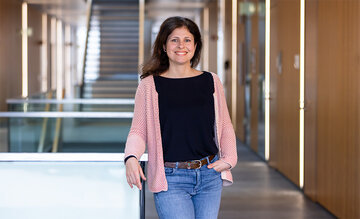
Shape health and quality of life
Would you like to work on solutions for a healthier life for different sectors of the population? Would you like to work on shaping the healthcare system or healthcare policy framework? Are you interested in current topics such as climate, sustainability and digitalisation? Then studying health sciences is the right thing for you!
Programme content and structure
The course deals with the physical, psychological, social and economic conditions of human health as well as the organisation of the healthcare system. For a "healthy" society, new academic qualifications are needed to meet the current challenges. We teach you them. From corona to dementia, digitalisation and climate - health affects us all. How can people stay healthy for a long time? Avoid risk factors, strengthen protective factors - learn more!
Health Sciences is a broad field
Our forward-looking specialisations – Planetary Health and Digital Health – focus on two particularly important, innovative, and exciting areas. While each takes a different approach, they share a common goal: to make our healthcare system and people’s living environments fit for the future. Students and lecturers alike take an active role in shaping these processes of change.
Specialisation - Digital Health

Digitalisation is seen as an important lever for making our healthcare system fit for the future. Health data and digital applications offer far-reaching potential, but also harbour risks. It is therefore just as important to handle health data in a competent and considered manner as it is to manage change processes professionally.
Do you want to contribute to advancing the digital transformation of the healthcare sector? In the Digital Health specialisation you will acquire skills that will enable you to design health technologies (such as health apps), digital interventions and care concepts as well as provide advice on possible applications.
Specialisation - Planetary Health

Climate change is already the cause of multiple diseases. In the Planetary Health specialisation you will deal with global environmental changes, their effects on our health and corresponding options for action at varopis levels.
By learning about concepts of sustainability in healthcare and acquiring skills for transformative action in this area, you will be able to actively tackle climate change as a health scientist in the future and make an important contribution to improving health
Entry requirements
To apply for AGW, you need a university entrance qualification, i.e. either the general higher education entrance qualification (Abitur), the subject-specific higher education entrance qualification, the entrance qualification for universities of applied sciences or a previous qualification recognised as equivalent.
If you have any questions, send us an email, give us a call or attend one of our regular online consultation sessions. Our staff and student ambassadors will be happy to answer your questions. Check the calendar below for the next dates. By the way, registration is not necessary.
AGW specifics
Here, theory is put into practice
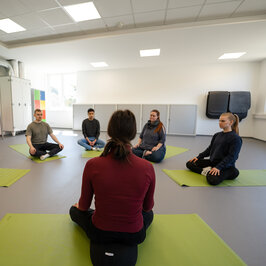
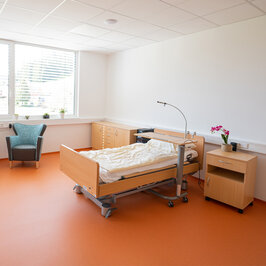
At our campus in Furtwangen, we have well-equipped laboratories and practical training rooms. The Future Care Lab focuses on the development of technical assistance systems, and in the Multiprofessional Skills Lab, we have facilities such as a movement room, a teaching kitchen, and a hospital and care room.
To give you a better idea of the topics we deal with in the AGW (Applied Health Sciences) programme: in the Dominican Health project, for example, we are helping to establish a polyclinic in the Dominican Republic. We also tackle issues such as student health, promoting physical activity in schools, and stress management in the workplace. Another example: using a bottom-up approach, we are reducing access barriers to the German healthcare system for migrants in the Kinzigtal region.
Sounds good? Then come and join us!
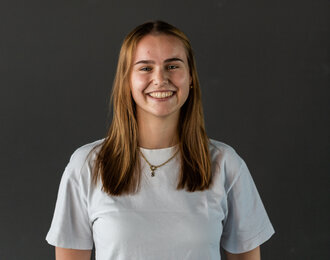
For further information about the degree programme, you’re welcome to contact our student ambassador by email at any time:
Dear prospective students,
My name is Sara Geißler, and I’m currently in my third semester of Applied Health Sciences.
In my degree, I’m learning key foundations to gain a holistic understanding of the German healthcare system. If you have any questions about choosing a degree, applying, or student life in general, I’d be happy to help. Feel free to contact me about other degree programmes in our faculty as well:
Email application is started:studienbotschafter-agw(at)hs-furtwangen.de
Semester fees
Special features
Part-time study
A degree programme that fits your life: Full flexibility with proven quality
Studying is usually a full-time job – but not necessarily. Our bachelor’s degree can also be studied part-time, offering a flexible model that adapts to different stages and situations in life!
The workload corresponds to around 50 per cent of a full-time programme. You should plan for approximately 20 hours per week. Accordingly, your studies will take about twice as long to complete. The programme is structured differently and extended in line with the part-time format. Whether you are working, raising children, or unable to take on full-time studies for other reasons – we are happy to advise you!
Our Download file:FAQs provide a summary of the most important points regarding part-time study.
Your contact for all information on part-time study:
Internal link opens in the same window:Juliana Dlugosch
Your career prospects
The career paths of our graduates are as diverse as the programme itself. You can work in health management in companies, in care management at healthcare providers or in health consulting in local authorities.
Whichever path you choose, the healthcare sector is a constantly growing industry. With an internationally recognised university degree from HFU you are ideally prepared for responsibilities in the professional world.
Once you have your bachelor's degree in your pocket, you can continue your academic career by taking a master's, for example in Internal link opens in the same window:Applied Health Promotion or Internal link opens in the same window:Interdisciplinary Health Promotion. And you can even do a doctorate with us afterwards!
One example from professional practice
![[Translate to English:] Sophia Warnecke](https://www.hs-furtwangen.de/fileadmin/_processed_/e/3/csm_Passbild_Sophia_Warnecke02_c1c8d54367.jpg)
‘With my MA in Health Sciences (bachelor's degree from HFU, master's degree from RWU), I worked in the public health service for several years and headed the municipal health conference in Lörrach. This is a health policy committee at regional level which is a mandatory task for every city or district with a public health department and thus represents a solid professional perspective for AGW/AGF. In this context, I was able to use 100% of my health science expertise, from health planning and reporting to scientific work (in order to prepare my own analyses and reports for the district) and project management soft skills. The specialisation in ‘Municipal Health Promotion’ which I took in the AGW bachelor's degree was particularly helpful, as wekk as the many group projects, presentations and the practical project.
After around four years, I changed sectors and now work for AOK Baden-Württemberg in the Prevention Division. Here, I coordinate projects and partnerships in non-work environments such as daycare centres, schools, local authorities and sports clubs as part of the statutory prevention mandate of the health insurance companies. This is also a very fulfilling professional field for health scientists.’
Sophia Warnecke, Applied Health Sciences graduate

"As a health scientist, I have been working in the public health service for four years now. In the team of the municipal health conference and as head of the self-help contact point of the Schwarzwald-Baar district, I have many tasks to implement the knowledge I acquired during my Applied Health Sciences bachelor's studies. The most important skills are project management, scientific work and a broad knowledge of health promotion and prevention.
My main responsibilities are the implementation of health-promoting projects in various living spaces, such as the movement pass to promote exercise among kindergarten children or the coordination of self-help groups and the promotion of the self-help landscape in the district. In community health promotion, it is important to us to strengthen citizens' health literacy. My day-to-day work is therefore filled with various congresses and events that we plan and implement, such as the health congress at HFU, the self-help day or the gesund&vital forum.
At university I was shown many new perspectives on the topic of health, which have had an impact on both my professional and private life, and I am very grateful for that."
Regina Lechmann, Applied Health Sciences graduate
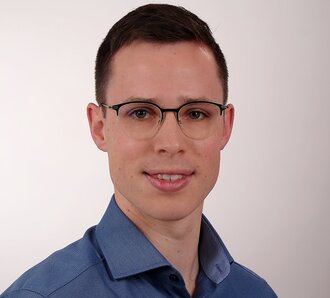
After completing my degree in health sciences (BSc), I managed an interdisciplinary health centre for several years. In this role, I was able to draw on content from elective modules in occupational health management and the health economics knowledge I had acquired during my studies.
I have now been working in medical technology in various roles and teams for five years. I find the confidence in presenting that I gained during my studies and the numerous group projects particularly valuable. Through numerous papers and presentations on health science topics, I have internalized the ability to reduce complex content to its essentials and communicate it in a way that is understandable at the management level. In addition to leading a team of several people, I am also significantly involved in the company's external communications in my role as Head of Medical Marketing. My understanding of scientific work makes it easy for me to exchange ideas with opinion leaders in the industry. The ability to read, classify, and critically evaluate studies helps me in my daily work to prepare relevant and well-founded content for interested parties and those affected in the target group.
Ole-Christoph Siefke, graduate in Applied Health Sciences




Your key contact
Your future is important to us. Contact us for advice.