Innovative and essential
Molecular biology methods are indispensable in research, medicine and biotechnology.
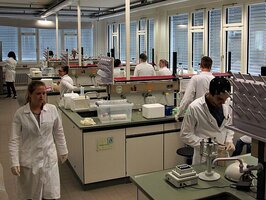
In the molecular biology laboratory at Furtwangen University, students learn how to apply innovative techniques such as cloning, CRISPR-Cas and genotyping.
These skills are essential for the development of new therapies, the production of drugs and the understanding of genetic principles. The laboratory's modern equipment offers students the ideal preparation for practical work and qualifies them to become sought-after experts in industry and research institutions worldwide.

Purpose of lab
The molecular biology laboratory is used for practical courses in the Applied Biology and Molecular and Technical Medicine degree programmes. Students also carry out their practical work here as part of their coursework and theses as well as research internships. The laboratory is equipped for safety level 1 genetic engineering work.
- Cloning and expression of recombinant proteins
- Restriction, ligation and transformation (various techniques)
- CRISPR-Cas technology
- Gene expression studies
- (PCR-based) characterisation of recombinant microorganisms
- Genotyping
Lab equipment
Equipment:
- Incubators for the cultivation of (recombinant) microorganisms
- Electroporator
- PCR thermoblocks
- Real-time PCR cycler (LightCycler, Roche)
- Agarose gel electrophoresis modules with gel documentation system
- SDS-PAGE and Western blot modules for expression detection of (recombinant) proteins
- Cold room, -20 and -80°C storage systems
- Sterile workbench
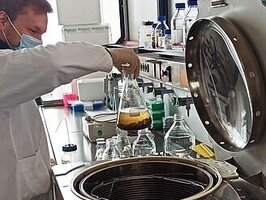
- Autoclave
Examples of student projects
Projects
Collaborative project “MoDe_ProBio (Model-based design of processes for the bioeconomy)
The aim of the “Model-based design of processes for the bioeconomy” (MoDe_ProBio) project is to convert biological raw and waste materials into marketable products.
Digital twins, model-based experimental design, life cycle assessment and an economic concept for marketing are intended to make the processes more environmentally friendly and efficient.
MoDe_ProBio is a joint project with several universities and industrial partners.
One example process is the cultivation of E. coli for the production of PETases, which can break down PET.
EKIKO
The research and development of new therapeutic agents is of essential importance in combating life-threatening diseases and improving quality of life and is therefore a key part of the success story of modern biomedicine. At the same time, the development of new active substances is associated with major challenges, high expenditure and economic risk.
Early drug discovery takes place in this innovative field of tension. Biophysical and biochemical methods have been established in recent decades, particularly in the field of low-molecular active ingredients, in order to make more robust decisions and thus reduce the risk of a potential active ingredient failing at a later stage.
While this approach is already well established for reversible-binding molecules, this does not apply to the same extent to the new approach of rationally identified covalent active substances.
The aim of the project is therefore to establish experimental and computational evaluation strategies for covalent-binding drug candidates in order to improve the discovery process for this increasingly prevalent class of drugs.
Funded by the Federal Ministry of Education and Research (BMBF) / Funding program Research at Universities of Applied Sciences / FKZ: 13FH564KX2
Our Common Future - Microplastics as a problem residue in my city
In cooperation with schoolchildren, the local microplastic pollution of the waters in Villingen-Schwenningen is to be catalogued and possible entry paths from households and industry identified.
One solution is the use of recombinant plastic-degrading enzymes from fungi and bacteria. The extent to which these can break down microplastics, e.g. from water samples, under real conditions is being investigated jointly in the laboratory.
Head of Lab
Molecular biology offers the solution for the future. I'm happy to provide more information!
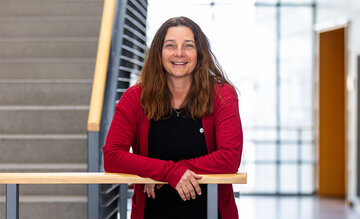
Professor of Molecular Biology
Head of HFU.Prep