Cyber Security and AI in the classroom
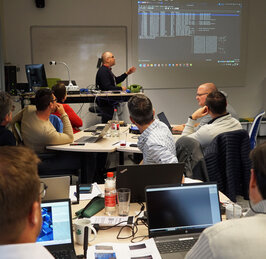
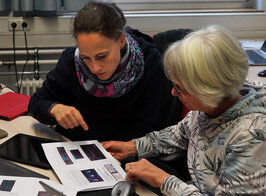
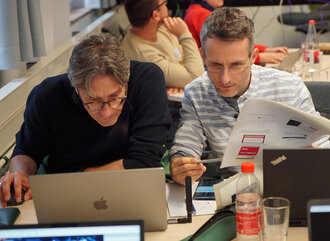
A training course for computer science teachers at HFU focused on practical experience and exchange. Around 30 teachers from the region took the opportunity to explore the topics of cyber security and artificial intelligence not only in theory but also in practice.
Together with Prof. Dr. Richard Zahoransky, head of the “Cyber Security” degree programme, the teachers ventured into various hacking experiments carrying out attacks on a password-protected Wi-Fi network, even eavesdropping on a telephone conversation at the end – within the protected framework of the training course, of course. This was followed by a forensic examination of a USB stick. Deleted images and text files were found and recovered.
Professor Zahoransky also reported on his professional experience and made it clear that cyber security is no longer a specialist topic for experts, but affects all areas of life and is an indispensable foundation for our increasingly digital society. At the same time, he made it clear that IT security and computer science professionals are in high demand and that attractive career prospects await his graduates in a promising industry.
AI with passion and humour
The second part of the event focused on artificial intelligence. Dr. Pascal Laube, professor of software systems and AI, describes himself as someone who “breathes AI.” What initially sounds like an exaggeration became clear during his presentation—from facial recognition to chatbots, from promising applications to dangerous risks. Laube spoke about the light and dark sides of AI and conveyed how important it is to take a differentiated approach to this technology.
Between fascination and frustration — the role of paedagogy
Laube summed it up well, “Professors and teachers are in the same boat − both are teachers.” What unites them is not only their enthusiasm for content, but also their concern for their students. With the availability of AI tools, students' willingness to make an effort is, in some cases, declining. Instead of tackling tasks themselves, they let AI do the work. The challenge is clear − traditional teaching methods no longer work. Teachers in schools and universities are being called upon to find new ways of teaching.
Despite the serious topics, there was no shortage of laughter. Laube sprinkled anecdotes from his former professional life throughout his presentation, lightening the sometimes heavy subject matter. Between Wi-Fi hacks and AI skepticism, the result was exactly what makes continuing education so valuable − practical knowledge paired with inspiration and a dash of humour.
Enthusiastic feedback and high demand
With high demand, positive feedback, and palpable enthusiasm among participants, the event proved to be a resounding success − a win for everyone involved in shaping the future of computer science education.