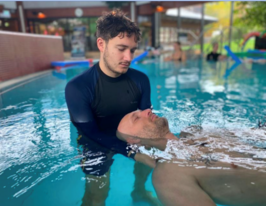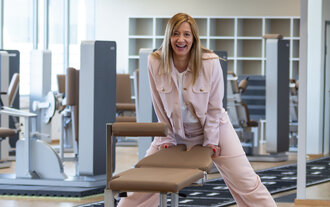
Prof. Dr. Marie Ottilie Frenkel leads the research project at Furtwangen University, which initially involves a study to develop new therapeutic approaches for patients with long COVID. Photo: HFU
Furtwangen University conducts research into new treatment options
In a new study, Furtwangen University (HFU) is investigating a promising therapeutic approach for patients with long COVID and post-COVID syndrome. The aim of the “FLOAT Intervention Study” (Fatigue in Long Covid and Aquatic Breathing Therapy) is to test the effectiveness of the “Relaqua-Med” method. This combines breathing techniques from apnea diving with elements of yoga, and could represent a new, non-drug treatment option for those affected.
Furtwangen University is collaborating on the study with the Institute for Movement and Occupational Medicine at the University Medical Center Freiburg, the Central Institute of Mental Health (ZI) Mannheim at the University of Heidelberg, and Freiburg sports physician Dr. Andreas Aust.
First appointment on 4 October in Freiburg
Test subjects are now being sought for the first implementation at the Keidel Therme in Freiburg on Saturday, October 4. “We are looking for people aged 18 to 65 who have been diagnosed with long or post-COVID and have symptoms of fatigue or dyspnea,” explains Prof. Dr. Marie Ottilie Frenkel, who is leading the research project at HFU. Over a period of four weeks, the test subjects will participate in eight Relaqua-Med sessions conducted by state-certified physiotherapists. Nik Linder, who has set several world records as a freediver and teaches physiotherapy at HFU, will also be involved. Before, during, and after the series of treatments, the participants' fatigue symptoms, sleep quality, physical performance, autonomic regulatory processes, and attention will be examined.
Between 6 and 36 percent of people who have had COVID-19 develop long COVID or post-COVID symptoms, including fatigue, sleep disorders, and shortness of breath. These are often accompanied by significant limitations in quality of life. To date, there are no causal treatment options – guidelines primarily recommend symptom-oriented approaches such as breathing and relaxation therapies.
“With Relaqua-Med, we utilize the body's natural diving reflex. Among other things, this causes a reduction in heart rate and improved blood circulation to vital organs,” explains Prof. Frenkel. Initial pilot studies indicate positive effects in terms of sleep quality, pain symptoms, and psychosocial limitations.
“The results could be an important step toward developing new, low-threshold therapy options for people affected by long COVID,” Frenkel continues. “In this way, we are not only contributing to health research, but also to the social participation of those affected.” Typical for Furtwangen University, the research topic is also being incorporated directly into teaching – “the first, very successful bachelor's theses are already available,” reported Prof. Frenkel.
The FLOAT intervention study could serve as a basis for further research projects and, in the future, could also be applied to other chronic diseases with similar symptoms.
Those interested can register for the study by email: float(at)hs-furtwangen.de